The Non-Runner Who Finished The Derby
The favourite ran, crossed the line in tenth, and was then ruled never to have started at all.
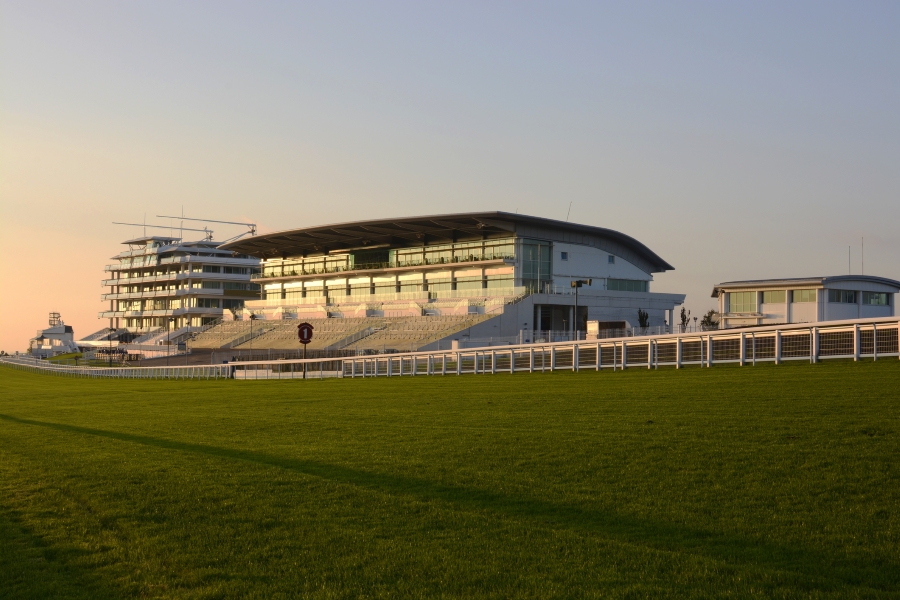
There has been a lot of noise about what happened to Benvenuto Cellini at Epsom on Saturday. Before I tell you what I think, I want to make sure you have the facts as I understand them. This piece works through the incident, the rule, the inquiry and the reaction; only at the end will I give my own view.
The Derby has seen false starts, disqualifications and no shortage of heartbreak down the years. Saturday’s Betfred Derby produced something new: a horse who ran the race, crossed the line in tenth, and was then officially ruled never to have started.
Benvenuto Cellini, the 3-1 favourite trained by Aidan O’Brien and ridden by Ryan Moore, has been recorded as a non-runner in the 2026 Derby. The decision has set off one of the fiercest arguments British racing has had in years.
What Happened in the Stalls
It came in the seconds before the gates opened, on a rain-soaked afternoon at Epsom. An overhead ITV camera above Moore’s head in stall 12 caught the moment: Benvenuto Cellini’s near hind leg had snagged on the running board inside his stall. When the gates opened, the Frankel colt was effectively standing on three legs, and could not jump off with the rest of the field.
Moore knew at once. He glanced to his left just before the start, missed the break badly, and was near enough last within a stride or two, with no way back into the race. He came home tenth of the fourteen as O’Brien’s second string, Christmas Day, won under Ronan Whelan.
Twenty minutes after the finish, the stewards gave their verdict.
The Rule: What the Regulations Actually Say
The decision rests on Rule (H)6 of the BHA’s Rules of Racing, substantially amended on 1 May 2024. Before that date, the only grounds for making a horse a non-runner once the stalls had opened were a mechanical fault with the stalls or a horse being riderless at the off. That narrow window was widely felt to be too tight.
As it now stands, the rule says that in a race started from stalls, the stewards may declare a horse a non-runner where it is denied a fair start and its chances are materially affected. That includes a horse prevented from starting on equal terms by a faulty action of the stalls, or a horse that has gained an unfair advantage at the start. The rule also states that a horse cannot be made a non-runner under those provisions if it wins the race.
The change brought Britain into line with the International Federation of Horseracing Authorities model rule, and with the approach of most other major racing nations. When it came in, the BHA published several worked examples to show when it might apply. One of them reads almost like a description of Saturday: where a horse kicks out and gets caught in the stalls before the mechanism has been operated, and the starter is unaware, so the horse cannot start on equal terms, the stewards can consider a non-runner.
The BHA’s position, then, is that Saturday was not some unforeseen test of the rule. It was the exact situation the rule was written for.
The Stewards’ Inquiry: What the BHA Found
In a statement on the BHA’s website on 8 June, head of stewarding Shaun Parker set out the process. Straight after the race, the race-day stewards held an inquiry, taking evidence from the starter, the veterinary officer and Ryan Moore.
Parker confirmed what the inquiry established. Benvenuto Cellini had one leg raised and trapped on the running boards in the moments before the start. The starter was unaware, and Parker was clear this was not negligence. It happened in fractions of a second, and the starter could not have been expected to see it.
Had he seen it, he would have held the start, freed the horse’s leg and called for a veterinary check before any decision to reload. Because he did not, the start went ahead, and Moore was on the back foot from the instant the gates opened.
Moore’s evidence mattered. He told the inquiry his instructions and his intention had been to ride positively and go forward. The footage showed him second-last within moments of the start. The stewards concluded, unanimously, that the horse had been stopped from starting on equal terms and that this had materially affected his chances.
Parker told the Racing Post that on reviewing the film they saw the leg caught on the running board as the start was effected, the horse effectively on three legs when the gates opened, unable to go with the field, and that Moore had known straight away there was a problem.
The Fallout in the Betting Ring
The money side hit at once. Backers of the winner, Christmas Day, who had been backed in to 7-1, took a Rule 4 deduction of 25p in the pound, so a winning £10 bet returned £52.50 rather than the full £70.
The deduction applied because every bet struck on Benvenuto Cellini after the final declarations on Wednesday 3 June was refunded, not only those placed on the day.
Firms then handled it differently, especially in the first hours after the announcement, which left winning punters facing an uneven and confusing picture depending on where they had bet.
On Racing TV’s Luck on Sunday, Simon Clare, group director of consumer PR at Entain, which owns Coral and Ladbrokes, called the decision “an extraordinary act of self-sabotage” and put the damage in the millions, both to reputation and to the balance sheet. Entain confirmed the waiver was costing it hundreds of thousands of pounds.
The Horseracing Bettors Forum was just as scathing. Chair Sean Trivass said members were “amazed” by the ruling and warned of a dangerous precedent, pointing to future cases where a horse rearing in the stalls or missing a break over jumps might trigger the same rule. The Forum also noted that the gap between firms made things worse, with winning punters on the same race paid materially different sums depending only on who held their account.
Voices From the Sport
Former champion jockey Richard Hughes was among the sharpest critics. On X he wrote: “What a terrible decision to make the favourite of the Derby a non-runner. If he won by five lengths, would they make him a non-runner? Who is running our sport, making these simple decisions?”
It is a fair question. Officials later confirmed that had Benvenuto Cellini won, he would not have been made a non-runner, since his chances would not then have been judged materially affected. The suggestion that the result shaped the stewards’ reading of whether the start was fair has troubled plenty of people in the sport.
Aidan O’Brien, as ever, was measured. He told the Racing Post: “What can you say? He unusually had his foot up on the side of the stalls, so it’s unusual, but he’s fine; that’s just the way it is. Ryan said he just came out on three legs, but what can you do? Things don’t always happen perfectly for every horse, and that’s the way it is.”
Part-owner Peter Brant backed the ruling, with connections saying the horse had never had a chance to run to the plan.
The Rule in Action: Five Times Nobody Noticed
One of the BHA’s most telling points afterwards was that Saturday was not the first use of the rule in 2026. It was the sixth.
Its blog on 8 June set out that Rule (H)6 had been applied five times earlier in the year, at Yarmouth, Windsor, Kempton, Southwell and Exeter, before Epsom put it on the front pages. Not one of those five drew any coverage. The rule simply did its job, quietly and correctly.
The Windsor case is the important one: it was made with no video evidence at all. The stewards reached their non-runner decision on verbal witness testimony alone, from those at the start. That is the strongest answer to the claim that Epsom was only possible because of the ITV overhead camera. The BHA has been firm that the stalls camera footage was not available to stewards in the early stages of the inquiry, and so played no part in the outcome.
Taken together, the five make a strong case for the rule’s consistency. They drew no attention precisely because they came at smaller fixtures, away from the ITV cameras and the World Pool. The same stewards, the same rule, the same kind of verdict.
The BHA’s Defence, and the Harry Angel Precedent
The BHA’s blog draws a pointed historical comparison. In 2018 the heavily backed favourite Harry Angel had a near-identical experience in the Diamond Jubilee Stakes at Royal Ascot, his start wrecked when a hind leg became trapped over the running board. Back then, the rule did not exist. Harry Angel counted as a runner and his backers lost their money. The BHA notes the sustained criticism that followed, from media and punters alike, over the unfairness of a horse being called a runner when it had not been given an equal start.
The message is plain: the rule was brought in to stop that happening again. The blog also pushes back hard on the precedent worry, stating flatly that horses which rear after the mechanism has been operated will not be made non-runners, having been given the chance to break evenly and simply failed to take it.
The authority closes by standing behind its officials: “We stand by our Stewards who made this decision on the day in line with both the Rules as they are framed, and the intention for which they were introduced.”
The Wider Implications
The BHA says it will talk to the industry about the concerns raised and that its rules are always under review. But it has been careful not to hint at any quick retreat. And there is still the matter of the bookmakers splitting over whether to apply Rule 4, which has caused its own share of ill feeling among the public.
What is certain is that the 2026 Derby will be remembered not for Christmas Day’s fine front-running win in the mud, nor for O’Brien’s record-extending twelfth Derby, but for a chestnut colt whose hind leg caught a running board for a fraction of a second, and who officially never ran at all.
My Take
There have been a lot of overheated statements in the press this week, and a lot of comment with the facts in short supply.
My view is that the rule is the rule, and the stewards were entitled to make the decision they made.
Rule (H)6 is clear, and it left them little else to do but declare Benvenuto Cellini a non-runner. They knew the rule had been used five other times in 2026. The only difference was that this was the Derby, under the full glare of the cameras, and the others were low-key meetings nobody was watching.
That is my biggest problem with the reaction. Where were all the journalists the other five times this year? There is a general sense that because this was the Derby the rules should somehow be read differently, and that makes no sense at all. Interpreting the same rule two ways depending on the size of the race would do far more damage to racing than this incident and its aftermath ever could.
On top of that, this was the 3-1 favourite. Every bet placed after Wednesday’s final declarations was refunded, and a Rule 4 deduction of 25p in the pound applied to winning bets, though some firms waived it. But let’s be honest: if this had been Ancient Egypt, it would not be getting a fraction of the coverage.
For all that, it is hard to argue the rule doesn’t need looking at and reframing. As it stands, it lacks clarity, and above all it needs explaining to the public far better. That a rule can be applied to a horse who finishes tenth but not to one who wins the same race is, on the face of it, absurd. If the BHA cannot explain that distinction in plain English to a casual punter, the rule will keep generating this exact heat every time it is used.
Whether the BHA will change anything remains to be seen. My instinct is that they will at least revisit the wording, if only because the alternative, leaving it as it is and hoping the next application lands at Southwell rather than Epsom, is not a plan that survives contact with reality for long.
Racing has a habit of shooting itself in the foot, and I understand why so many have reached for that line this week. Unlike most of them, I don’t think this is one of those times. The stewards followed the rule, consistently, and were right to do so. The problem isn’t the decision. It is that the rule behind it is not yet fit to stand up to the scrutiny of the biggest race of the Flat season.
Never miss a lesson
New guides, previews and history every week. Free to your inbox.
Join the mailing list