Should Racing Fear Prime Minister Burnham?
Born a mile and a half from Becher's Brook. Been racing once.
Britain has a new Prime Minister, its seventh in ten years, and racing has a new set of questions. Andy Burnham walked into Downing Street on 20 July with a record on gambling that the sport’s leaders have been reading closely ever since, and three weeks later he gave them their first answer. Before I tell you what I think it means, I want you to have the facts: how he got the job, what he has said and done about betting over the years, who now holds the briefs that matter, and what his opening move tells us. My view comes last, as usual.
How He Got the Job.
No general election put Andy Burnham in No 10. Keir Starmer resigned after months of crisis, and the route his successor took to replace him was unusual even by the standards of a country now well practised at changing Prime Minister between elections.
Burnham spent the spring outside Parliament, still serving as Mayor of Greater Manchester. In February, Labour’s National Executive Committee blocked him from standing in the Gorton and Denton by-election. In May, Josh Simons, the sitting MP for Makerfield, resigned his seat for the specific purpose of letting Burnham stand in it. Burnham won the by-election on 18 June, and won it well: almost 55 per cent of the vote and a majority of more than 9,000 over Reform, in a borough where Reform had swept the available council seats only weeks earlier. Whatever else you say about the man, he did not sneak in.
The leadership was another matter. When nominations closed, Burnham was the only eligible candidate, backed by more than 94 per cent of Labour MPs, a higher share than Gordon Brown managed in 2007. He was acclaimed leader on 17 July without a contest and without a single party member casting a ballot, and became Prime Minister three days later. A seat vacated to order, a coronation without a vote, and the keys to No 10. The country was not consulted at any point.
No contest. No members’ ballot. No general election. Three days after his acclamation, he had the keys to No 10.
The Record on Gambling.
Burnham was born in Fazakerley, a mile and a half from Becher’s Brook, in the same hospital that has patched up generations of Aintree jockeys. His personal contact with the sport amounts to one day at the races: the Friday of this year’s Grand National meeting.
His contact with the gambling debate runs much deeper. In 2022, as mayor, he backed Against the Odds, a Greater Manchester campaign to end gambling sponsorship and marketing across all levels of sport. He argued that betting sponsorship and advertising had become so normalised that people risked feeling they could not enjoy sport without a bet, and he urged every sports club in Greater Manchester to sign up. His own combined authority ran a public anti-gambling-harms campaign under the banner Odds Are: They Win. In April last year, he was one of 43 council leaders and mayors behind a letter to the culture secretary demanding reform of the Gambling Act 2005, including ending the “aim to permit” rule that obliged councils to lean towards approving licences for betting shops and gaming venues. Since he entered No 10, reports say he has been considering nationalising the National Lottery.
I will say two things in the name of fairness. First, his target has been consistent: premises and promotion, not the punter. I can’t find a speech or quote where he has argued against the right to have a bet. Second, the 2005 Act he is now unpicking was passed by a government he would serve in as a minister. He also voted for it. The Prime Minister now dismantling New Labour’s gambling settlement helped build it.
The Cabinet That Matters.
For racing, the reshuffle brought one reassurance and one unknown.
The reassurance is Lisa Nandy, who stays at the Department for Culture, Media and Sport, one of very few ministers reappointed to the same job, with digital policy added to her brief. The Betting and Gaming Council welcomed her retention and said it would build on a constructive relationship. Racing knows her, and she knows racing’s arguments.
The unknown is Vicky Foxcroft, who replaced Baroness Twycross as gambling minister on 22 July. She is the ninth person to hold the brief in six years, which tells you how seriously successive governments have taken it. She has not taken a public position on racing since entering Parliament in 2015. But she has spoken more widely about gambling: as a shadow culture minister in 2019 she backed a ban on gambling advertising in live sport, and last June she signed a Commons motion calling gambling harm a growing public health issue and demanding high street reform. She inherits the tail end of the 2023 White Paper reforms, including the Gambling Commission’s affordability checks, due for implementation in 2027. The BHA has already sought urgent talks with her about those checks. She will also chair the department’s Illegal Gambling Task Force.
Nine gambling ministers in six years. Racing keeps making its case, and the chair keeps changing.
Three Weeks In.
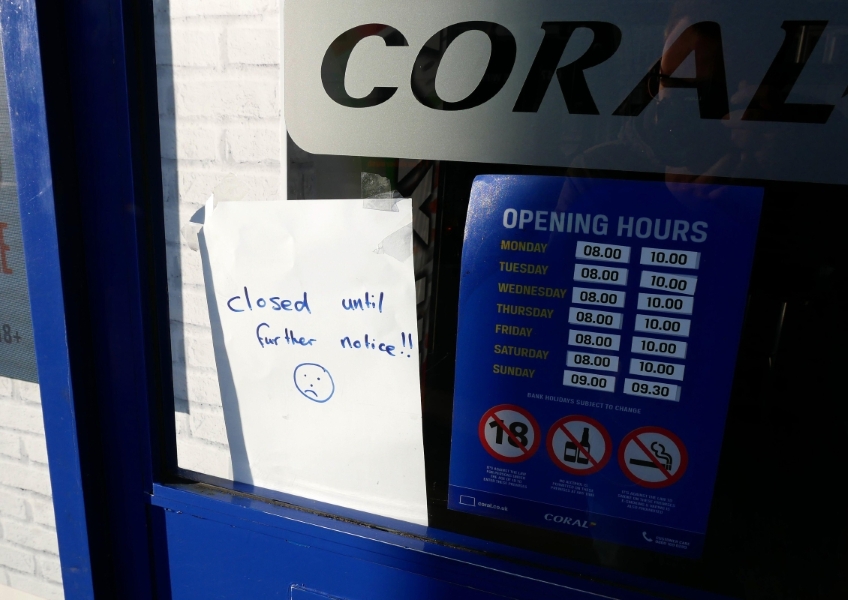
On 11 August, Burnham made his first move on gambling as Prime Minister, and it was the one he had campaigned for as mayor. The Government will abolish “aim to permit”. Adult gaming centres, the 24-hour slot venues, will need planning permission from the start of next year, and councils will get wider powers to refuse new betting shops. The announcement also swept vape shops into the same category.
The framing was the tell. Burnham said high streets had been “hollowed out” and become “unrecognisable”, and blamed the rise of betting shops, vape shops and rogue operators for displacing the shops and community spaces people want. On social media he promised councils tougher powers to deal with businesses “that aren’t good for our communities”. The shadow culture minister, Louie French, accused Labour’s “anti-fun police” of treating licensed bookmakers and punters as suspects. The Betting and Gaming Council said the claim that betting shops were spreading was simply wrong.
On the numbers, the BGC is right.
The Numbers Behind the Narrative.
The Gambling Commission’s own licensing figures show there were 9,111 betting shops in Britain at the end of March 2014. By the end of March this year there were 5,542. That is a fall of more than a third in twelve years, and it has not stopped: the BGC estimates more than 540 shops have closed since last autumn’s budget, with around 4,500 jobs lost, and something like 15,000 retail jobs gone since 2019. Whatever is hollowing out Britain’s high streets, it is not an unchecked spread of bookmakers. The bookmakers are leaving faster than almost anyone.
Why should we care about this? Betting shops serve two purposes. They are not only a shopfront for the sport I love; more importantly, they help fund it. Each shop in the country contributes to the levy and pays media rights that flow to racecourses and then into prize money. Entain, for example, has valued its retail estate to British racing at £50 million a year. Every closure reduces that, and a planning regime built to strangle the retail estate for bookmakers will, over time, accelerate a decline already well under way. None of this will show up in a headline about saving the high street. It will show up in the levy yield.
The high street he wants to rescue from betting shops has lost more than a third of them in twelve years.
What It Means for the Affordability Checks.
The Gambling Commission confirmed in July, before Burnham took office, that it will implement affordability checks in 2027. Racing’s leaders have warned they could cost the sport around £250 million over five years by driving punters to the black market. That decision was not Burnham’s, and this piece is not about the Commission.
The question he will have to answer is whether the new government will lean on the Commission to soften implementation, or do as his predecessor did and bail out of the topic altogether and leave it to them. Nothing in Burnham’s record suggests he is going to do anything differently to Starmer. A man who has spent four years campaigning to shrink gambling’s footprint in sport and on the high street is not going to spend political capital restraining a regulator that shares his direction of travel. Racing should assume the checks arrive as designed, and that any sympathetic hearing comes from Nandy’s department rather than No 10. The BHA’s urgent request for talks with Foxcroft is the right instinct. It should not expect the Prime Minister to be in the room.
My Take.
So, should racing fear Andy Burnham? Fear is the wrong word. But today, it should drop any hope that a change of Prime Minister means a detour from the path travelled so far. On gambling, this government sounds exactly like the last one, with one difference that matters: where Starmer’s administration squeezed racing through indifference, Burnham brings conviction. His quote from the announcement earlier this week regarding ‘aim to permit’, “For many people, the high streets they grew up with have been hollowed out and become unrecognisable over decades of decline. The rise of vape shops, betting shops and rogue operators have replaced the shops, services, and community spaces that people are crying out for,” says everything. He has believed for years that gambling’s presence in British life should be smaller; he has now been handed the power to act on it, and within three weeks he has.
To be fair, his stated targets have always been the high street and promotion rather than the punter, and a defensible argument is buried in there somewhere. Nobody seriously claims every high street needs another adult gaming centre, or should have numerous betting shops in close proximity. But a policy is only as honest as its premise, and that here fails on the regulator’s own figures. You can’t argue against an unchecked spread of betting shops, when betting shops are vanishing at the rate of several hundred a year, faster than almost any other sector of retail. I am therefore left asking one question. Does the Prime Minister not know the numbers, which is careless? Or is he fully aware of them and prefers the story, which is worse? Racing has seen where narrative-first policy leads. It is called affordability checks, and the bill is still being counted.
Which leads helpfully into the big issue: racing should be preparing now for the sponsorship fight. Against the Odds, the campaign Burnham personally championed, wants gambling sponsorship phased out across all levels and all types of sport. Applied without a racing exemption, that would tear a hole in the sport’s income. The case for the exemption is easy to make: betting doesn’t sit alongside racing the way it does alongside football; it funds the sport’s existence. But even easy cases have to be made early, loudly, and to the right people. Waiting until a consultation lands is how racing lost the affordability argument.
And underneath it all sits the thing I find hardest to swallow. Andy Burnham may prove a fine Prime Minister; three weeks is no basis for judging that. But consider how he arrived. A seat vacated for him, the first manufactured for an outsider’s return since the 1960s. A leadership secured without a contest and without a single member’s vote. No general election. There is nothing unconstitutional about any of it, and Brown, May and Sunak all entered No 10 between elections, but each of them was at least a sitting MP who came through their party’s ordinary machinery. A mandate that thin should breed humility. Instead, within a month, we have a Prime Minister confident enough to decide which legal businesses are good for our communities and which are not, despite evidence from his own regulator to the contrary. The punters in those 5,542 remaining shops all got a vote at the last election. On this Prime Minister, and on this policy, nobody did.
Racing cannot change how he got there. It can change how ready it is. The exemption case, the funding numbers, the truth about the shops: all of it needs to be on desks in Whitehall before the next announcement lands, not after. This government has shown racing its direction of travel in record time.
Racing should believe it the first time.
Never miss a lesson
New guides, previews and history every week. Free to your inbox.
Join the mailing list