Horse Racing: How Handicaps Work
Why some horses carry more than others, and why it decides most of British racing
Opening thoughts.
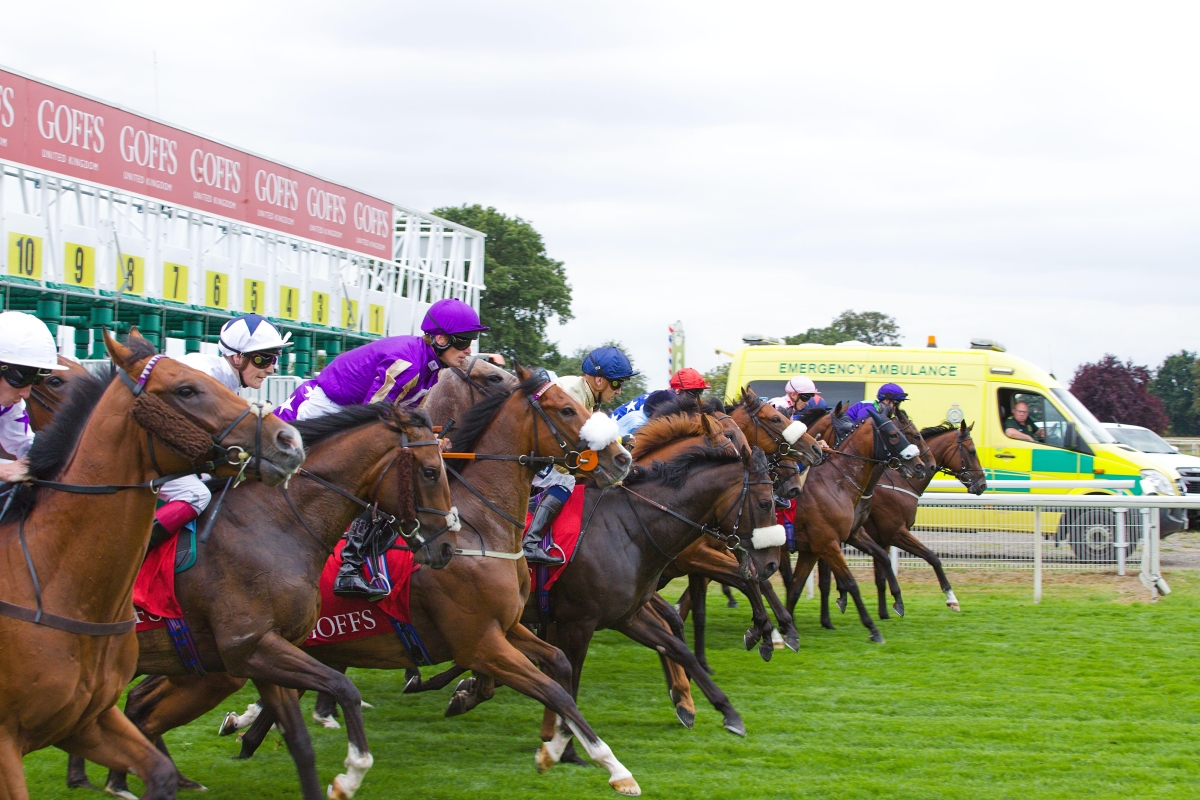
On most Saturday afternoons there is a time when the TV cameras concentrate on twenty or so horses circling the parade ring for a race nobody outside the sport has heard of. The screen prices go from 9/2 down to 66/1, or even 100/1 sometimes, and the names mean nothing to you unless you follow this type of race closely. If you are new to racing, this is usually where you look blankly at the racecard or reach for your mobile.
Handicaps have been my bread and butter for a long time, but I remember starting with no idea what was happening. My grandad explained a lot of this to me, and this article captures what he taught me years ago.
Over half of the races in Great Britain are handicaps. They are not the filler; they are the sport. If you don’t know what a handicap is, and concentrate on the pattern races, you are missing a lot of what this sport can offer. You are waiting for the parts of it you already recognise.
So here is what a handicap is, how the weights are decided, and what it is telling you.
The idea, stripped back.
A handicap is a race in which the horses carry different weights, and those weights are set by an official handicapper whose entire job is in theory to give every runner an equal chance of winning. Better horse, more weight. Slower horse, less weight. That is the concept.
If the handicapper got it right every time, and if horses ran to form every time, every handicap in the country would finish with all runners in a dead heat for first place.
They never do. Horses improve. Horses lose their form for many reasons. They hate the ground, love the track, are unlucky in running, or have an off day. The distance between what the weights say should happen and what actually happens is where the whole interest lives.
That distance is also why handicaps are competitive. In a big field handicap, a dozen horses can have a real claim, which is why the prices are long, the finishes are tight, and the noise from the last furlong of a good one is unlike anything else in the sport.
If the handicapper got it right every time, and horses ran to form every time, every handicap in the country would end in a dead heat.
Where the mark comes from.
Every horse in Britain, once it has won or run three times, has a number attached. On a racecard it sits in the column marked OR, for official rating. In conversation, people call it the horse’s mark.
A horse isn’t born with one. It begins its career in races where everybody carries the same weight, maidens and novices on the flat and their equivalents over jumps, with small adjustments for age and sex. It runs, it gets beaten six lengths, it runs again and finishes third, and the handicapper watches.
After three runs, or sooner if it wins, the handicapper gives it a mark. That number assesses how good the horse is, expressed in pounds. It isn’t a score out of a hundred, and it has no natural ceiling.
On the flat, a modest handicapper might be rated somewhere in the 50s. A useful one sits in the 80s. A horse rated above 105 is out of the ordinary and heading for better races. The best flat horses in the world are rated in the 130s, and the highest official rating ever awarded in Britain is 140 for the great Frankel.
Jumps ratings run on their own scale, and the numbers are higher. A serviceable handicap chaser might be in the 130s. Anything in the 160s is a festival horse. The outstanding chasers of recent decades have been rated in the 170s and beyond. A flat mark and a jumps mark are not comparable, and a horse switching from one code to the other gets a fresh assessment.
How the mark becomes weight.
Most handicaps are written for horses inside a band of ratings. A race might be open to horses rated 0 to 85, which means nothing rated above 85 can take part.
The highest-rated horse in the field gets the top weight. On the flat, that is usually 10st. Over jumps, it is 12st. From there, every pound of rating below the top horse takes a pound off the weight. If the 85-rated horse carries 10st, an 84 carries 9st 13lb, a 79 carries 9st 8lb, and so on down the card.
There is a floor. You will rarely see a horse being asked to carry less than 8st on the flat, or 10st over jumps, because a jockey has to be able to make the weight and ride safely. A horse whose mark would put it below that weight is described as being out of the handicap or in the long handicap, and it carries a few pounds more than the system says it should.
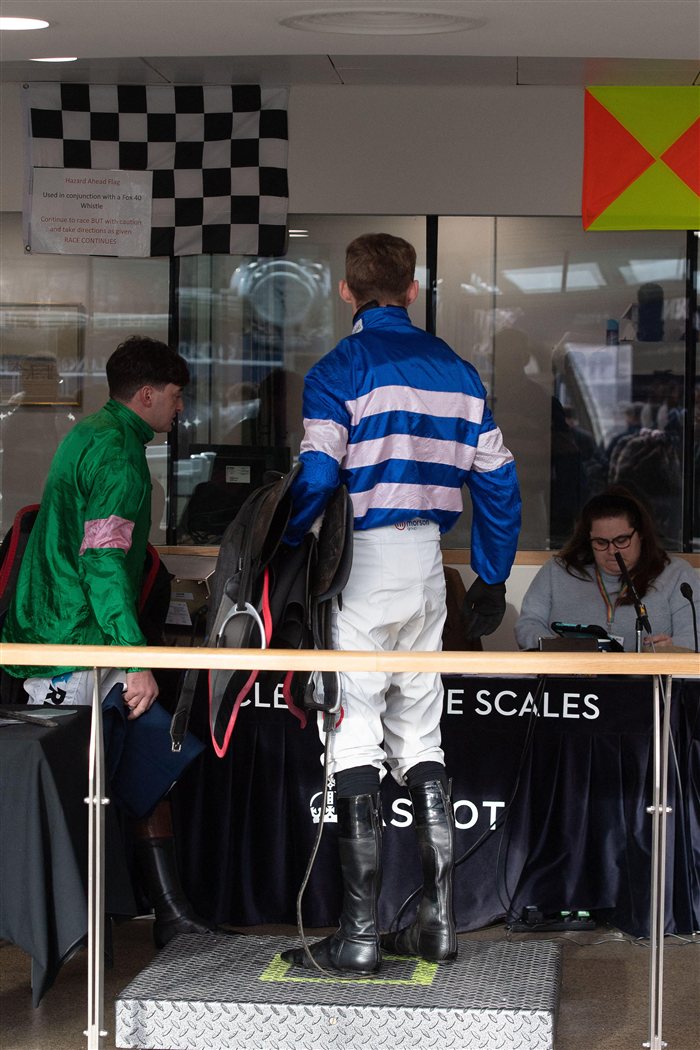
The weight is real, not just a figure created by the race rules. The weight the horse carries is made up of the jockey, saddle, and thin sheets of lead slotted into a cloth beneath it to make up the difference. Riders weigh out before the race and weigh in afterwards, and the weight has to match, or the horse can be disqualified.
Two other things shift the weight. An apprentice or conditional jockey, still learning the trade, claims an allowance that comes off the total. And a horse that wins after the weights for its next race have already been published carries a penalty instead, because its new mark has not had time to catch up.
Does a pound really matter? Over five furlongs, a couple of pounds is roughly a length. Over three miles of a staying chase, the same weight has much more time to do its work. These are rough working assumptions rather than laws of physics, but ask a trainer whether they would rather run off 82 or 85, and you will get an answer before you’re halfway through the question.
Going up, coming down.
The handicapper reassesses horses continually. New marks are published every week, usually on a Tuesday, and apply to entries made from that point on.
Win well, and the mark goes up. Win by six lengths with the jockey motionless, and it goes up a long way. Win by a nose after a fight, and it goes up far less, because the handicapper is judging the performance rather than the result.
Much to the annoyance of trainers and owners everywhere, losing works more slowly. A horse in poor form does not tumble down the ratings overnight. It comes down in ones and twos across months of disappointing runs, until eventually it arrives at a mark it can win from again. Plenty of horses spend entire careers riding this ladder. One can win a decent handicap in May, go up 8lb, become uncompetitive, slide back down through the summer and win again in September off something close to where it started.
That isn’t the system failing. That is the system doing precisely what it was built to do.
Why do trainers think about almost nothing else?
To a trainer, the mark is an asset. Getting a horse into the right race off the right number is a large part of the job, and the phrase you will hear repeatedly is “well handicapped”, meaning a horse the handicapper has underestimated.
A horse that drifts quietly down the handicap, then finds a stone of improvement on the day the money turns up, is a story every regular racegoer knows.
There are honest ways to end up well handicapped. A young horse still growing into its frame can improve faster than the assessments can follow, which is why progressive three-year-olds are so dangerous in autumn handicaps against older, fully exposed rivals. A horse that has been running over the wrong trip, on the wrong ground, in the wrong headgear, can look ordinary for a year and then look like a different animal when one of those things is changed.
There are also less honest ways, and it would be strange to write about handicaps and pretend otherwise. A horse that puts in a run of quiet, unthreatening efforts while its mark drifts steadily downwards, then finds a stone of improvement on the day the money turns up, is a story every regular racegoer knows. The rules require every horse to be run on its merits, and the stewards do act, but the tug between a trainer who wants a winnable mark and a handicapper trying to rate the horse honestly never disappears. That tug is a large part of what makes a handicap such an interesting puzzle to crack.
Jumps handicaps play by their own rules.
Everything above applies over jumps, with a few differences that give it a different character.
A jumps horse can hold two marks at once. It is rated over hurdles, and when it goes chasing it is given a separate mark over fences. The two are set independently, and the gap between them is one of the more absorbing things in the sport. A horse rated 140 over hurdles that begins its chasing career off 138 is being told, in effect, that nobody yet knows how good a chaser it is. Every so often the answer turns out to be a great deal better.
You can follow a single horse all the way up the handicap and all the way back down, and know exactly what its mark means, because you watched every pound of it being earned.
Novice handicaps carry their own qualification rules, requiring a set number of runs over the relevant obstacle before a horse can contest the bigger ones. The point is to make sure the handicapper has seen enough to form a view.
The weight range is wider, too, from 12st down to 10st, a spread of 28lb. In a big staying chase, that spread produces the sort of race where the top weight is a proven Grade One performer giving away nearly two stone to something nobody has heard of, and both can win it.
Then there is time. A flat horse might have two seasons on the track before it goes off to stud. A chaser can run for eight years or more, which means you can follow a single horse all the way up the handicap and all the way back down, and know exactly what its mark means because you watched every pound of it being earned.
The next few months.
The timing of this article isn’t accidental.
The flat season is moving towards its end, and that means there are several big field handicaps on the way from five furlongs to two and a quarter miles. Over the coming weeks the fields swell towards twenty-plus runners, the prize money climbs to levels that rival the pattern races, and horses appear that have been aimed at one particular Saturday since the spring. These are the races where the handicapper’s work is most exposed, and the winner very often comes from somewhere in the middle of the weights, at rewarding odds.
Over jumps the season builds more gradually. Autumn is for getting horses back on the track and finding out who has returned in good order. The heart of the jumps handicap season runs from Christmas through to Aintree in April, four months in which most of the famous jumps handicaps are settled.
If you were looking for a moment in the year to start taking handicaps seriously, you have picked a good one.
What changes once this makes sense?
You start reading a racecard differently.
The mark isn’t a fact about the horse. It is one person’s opinion, written down in pounds.
The OR column stops being background noise. You notice when a horse is running off a career-high mark, and you notice when one is racing from 10lb below the figure it was winning off last year. You look at the spread of the weights and get a feel for whether this is a tight, evenly matched race or one in which a class horse is trying to concede lumps to everything else.
You also start treating the mark as what it actually is. It isn’t a fact about the horse. It is one person’s opinion, formed by watching the same races you can watch, and written down in pounds. It is usually a very good opinion, but it isn’t always right.
That is the part nobody tells you at the beginning. A handicap isn’t racing’s second-tier product. It is an argument between the handicapper and everybody else, run at close to 40mph, settled inside the last furlong, on almost every card in the country, all year round.
That is what my grandad taught me, sitting on the sofa beside him, the well-read racing section of his paper open between us. It’s also one lesson of his that has never changed. Once you can follow the argument, ordinary racing stops being ordinary, and that will be thanks to him.
Next time.
Understanding handicaps leads straight to the next question: what the prices mean, and how to bet without feeling like the only person in the room who doesn’t know what is going on.
That is the subject of the next Racing School article: reading the bookmakers’ boards, working out what a price actually represents, and placing a bet with some idea of what you are doing. It follows on from this article more closely than it might sound. The moment you can see where the handicapper might have got it wrong, the number on the screen stops being a number and starts being a conversation.
Never miss a lesson
New guides, previews and history every week. Free to your inbox.
Join the mailing list