Form & Function: Summer Handicap Previews
Six of this summer's biggest handicaps, and where the value will be strongest.
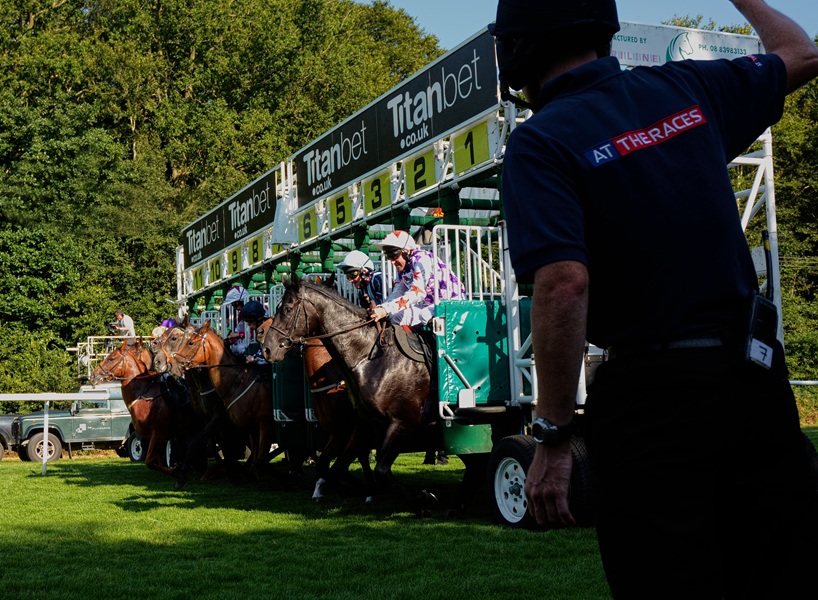
There’s a stretch of the flat season I look forward to more than almost any other, and it isn’t the one built around Group 1s. From the start of July through to the end of August, British racing serves up six of its best handicaps inside nine weeks. Big fields, wide-open markets, and races where the handicapper’s judgment gets tested in front of a full house rather than a select few.
I’m not going to spend much time on the pattern races that sit around these cards. The Falmouth, the July Cup, the Yorkshire Oaks, all worth watching, none of them the point of this piece. This is about the handicaps, and more specifically, about how I go looking for value in them.
My Approach
I build models from historical race data, and this is the right moment to set out the method I use for the biggest handicaps, since these are the sort of races it was built for.
The idea is simple to state and harder to do well. For any given race, I pull up to the last twelve renewals and break down every winner across a set of factors: age, weight carried, official rating band, days since last run, course, distance, and recent form figures. Individually, none of those factors tells you much. A lot of winners have carried under 9-7. Many winners were aged 4 to 6. On their own, these are just background noise.
What I’m actually building is a profile, a combined set of conditions that a horse has to match exactly, all of them, not most of them, before catching my eye. If the trends say the last ten winners were all aged four to six, had an official rating of 90 plus, ran within the last 35 days, and had finished in the first two at least once this year, then a horse only qualifies if it satisfies every single one of those conditions. Drop one, and it’s out, no matter how well it reads on form.
That may look overly strict. It is meant to be. It throws out plenty of horses that look interesting on paper, including some that go on to run well. That’s the trade-off. What it gives in return is a much smaller, much more defensible pool to bet from, built on what has actually happened in a race rather than what looks plausible.
It’s also worth saying that the picture looks different every time. Each race has its own quirks, its own biases, its own class trajectory, its own idea of what a winner looks like, so the factors that matter for one aren’t necessarily the factors that matter for the next. That is the method working as intended, not a flaw in it.
A caveat before I go further. These are big, competitive handicaps, and the fields aren’t confirmed until the declaration stage, usually 48 hours out. Everything below is built from the trends and the shape of these races as things stand. As nothing is known at this stage for most of these, I’d treat anything here as the starting point for that work rather than the finished product.
Old Newton Cup, Newmarket (July Course), Saturday 4 July
This one comes with an asterisk before we even get to the racing. A hole has appeared on Haydock’s outer track, and investigators are now pointing to historic mining activity in the area as the likely cause. The Old Newton Cup and its supporting Lancashire Oaks card have been switched to Newmarket’s July Course as a result, with the Jockey Club confirming the move.
It is still a Class 2 handicap, but over 1m4f precisely rather than the usual 1m3f175y. It is still open to four-year-olds and up, but on a track it has never been staged on before. That matters more than it might sound. A large part of the trend data built up specifically at Haydock loses relevance overnight. I’ll be working one out for this one, with real caution about leaning on the Haydock-specific angles whilst also avoiding drastic changes, as this should be a one-off.
It’s worth pausing on what’s actually being uprooted this year, because the race has more history behind it than most people watching realise. Its roots trace back to the Newton Gold Cup, first run over four miles on Newton Common in 1807. That early race lapsed within a few years, but the local Lord of the Manor revived the meeting in 1825 on a grander scale, styling it as the Ascot of the north, and the Gold Cup became the centrepiece of an annual gathering that ran for the rest of the century.
By the 1890s, the old course had fallen out of favour, partly due to unruly crowds, and the decision was made to move racing to a new site at Haydock. The last renewal at Newton came in 1898, run at short notice as the new track wasn’t quite ready. The following year, with Haydock established, the race returned under its own steam, going through a couple of name changes, the Newton Handicap, then the Old Newton Handicap, before settling on the Old Newton Cup in 1903.
It’s been part of Haydock’s July fixture ever since. Gainsborough became the race’s first dual winner in 1930 and 1932, and Pegasus repeated the feat in 1936 and 1937. More recently, the race has built an international pedigree. Collier Hill went on to win Group races in Sweden, Germany, Canada and Hong Kong after his 2003 victory. Alkaased followed up with victories in Group 1s in France and Japan, and Dangerous Midge added a Breeders’ Cup Turf in the same year after winning this in 2010.
Which is what makes this year’s move so significant. In over a century at Haydock, the race has never once been run anywhere else. Whatever happens on 4 July will be based on fewer data points of precedent.
Bunbury Cup, Newmarket (July Course), Saturday 11 July
Run on July Cup day, the Bunbury Cup is a Class 2 heritage handicap over 7f for three-year-olds and up, and it’s one of the most fiercely contested betting heats of the entire festival. Only two of the last ten winners started favourite, and one of those was More Thunder last year, who was a Group horse running in a handicap.
The race dates back to 1962 and takes its name from Sir Charles Bunbury, the 6th Baronet, who served as Senior Steward of the Jockey Club and did more than almost anyone to shape the sport as we know it. It was his colt Diomed who won the very first Epsom Derby in 1780, and it was Bunbury who introduced Newmarket’s two Classics, the 1,000 and 2,000 Guineas. There’s a nice bit of folklore attached to the Derby itself. The story goes that Bunbury and the 12th Earl of Derby tossed a coin to decide whose name the new race would carry. Bunbury lost the toss, but Newmarket got its own back a couple of centuries later by naming this handicap after him instead.
The roll of honour has thrown up some proper characters. Lester Piggott rode seven winners between 1966 and 1996, spread across six different trainers, which remains comfortably the best record of any jockey in the race’s history. On the training side, Mine became the race’s benchmark performer, winning three times for James Bethell in 2002, 2005 and 2006, a feat nobody else has matched.
The early trend picture: the majority of recent winners have been aged four to six, with three-year-olds having a particularly poor record, admittedly from a small sample size. Winners have also had their last run within 42 days of the race, and course form at Newmarket is valuable, with ten of the last twelve having run there before on either the July or Rowley courses, or both. It is also worth bearing in mind that the last eleven winners of this race did not win last time out, and ten from eleven have run a maximum of four times in that calendar year.
One scheduling note. This and the John Smith’s Cup take place on the same day and are normally run close together. It looks like there will be a longer gap between the races this year, based on provisional off times, but it’s worth checking closer to the day, as off times often change because of TV coverage.
John Smith’s Cup, York, Saturday 11 July
The 67th running of one of the summer’s litmus-test handicaps. Class 2, 1m2f56y, for three-year-olds and up, and it draws some of the biggest, most competitive fields of the season on the Knavesmire.
It started life in 1960 under a different name entirely, the Magnet Cup, and John Smith’s Brewery has sponsored it every single year since. That’s now the longest-running commercial sponsorship of any flat race in the world, and depending on how you count it, the longest continuous sponsorship in British racing full stop. The race took its current name in 1998. Sixty-six years of one brewery backing one handicap is easy to skim past, but it shows how deeply this race sits in York’s calendar. This is no one-off big-money event. It has built its own weight of history year after year.
This is a tricky race to pin down, with a wide range of trends at play. Winners have come from right across the market, from 5/1 joint-favourites to 22/1 outsiders, and the analysis here tends to reward looking past the shortest-priced horses rather than towards them. Narrowing down the field will be tricky, but looking at the last ten runnings, nine of the winners finished in the first seven last time, and most had won a Class 2 or Class 3 handicap in the past year.
Stewards’ Cup, Goodwood, Saturday 1 August
If I had to pick one race from this list to call the standout betting opportunity of the summer, it’s this one. The Stewards’ Cup closes Glorious Goodwood and is a Class 2 handicap over 6f, three-year-olds and up, with a safety limit of 28 runners. It is, genuinely, a cavalry charge.
The race grew entirely out of an older tradition. Through the 1830s, Goodwood’s senior steward had the right to award an annual cup to the winner of a race of his own choosing, with the distance varying wildly from year to year, anything up to a mile and a half. Lord George Bentinck, a prolific owner with stables at Goodwood, proposed fixing it as a permanent 6f sprint in late 1839, and the first running came the following summer in 1840. The winner was Epirus, trained by a man named William Scott, who, according to the old records, was frequently too drunk to ride, and so it was his brother John who took the mount instead.
The race has survived two world wars, though not always at Goodwood itself. It was moved to Newmarket between 1915 and 1917 and skipped entirely in 1918. The Second World War forced it out again, with Windsor hosting from 1942 to 1945. There’s a lovely story from the race’s post-war revival in 1947, when Sir Noel Murless travelled down from his Yorkshire yard only to get stuck in traffic on the narrow lanes near the course. His wife, Gwen, ended up unloading their fancied runner, Closeburn, from the horsebox and jogging him the final two miles to the track herself, just in time to get saddled.
Only six of the last twenty winners started favourite, and the draw has historically mattered a great deal on Goodwood’s downhill sprint track. With a field this size, there are simply too many horses for the price to reflect every angle properly. This is where I find a strict approach earns its keep, because the alternative is forming an opinion on 28 runners from scratch.
Great St Wilfrid, Ripon, Saturday 15 August
Ripon’s most valuable race of the season, run over 6f, Class 2, for three-year-olds and up. This one has an unusual pattern to its trends compared with the others. Favourites have actually done well here in recent years, six winning favourites in the last twelve renewals, which cuts against the perceived wisdom that big-field sprint handicaps always favour outsiders.
The race is named after Wilfrid, a seventh-century Northumbrian nobleman turned bishop who founded a monastery at Ripon around the year 660 and remains the city’s patron saint to this day, a rare case of someone getting a race named after them more than 1,300 years after their death. It’s older than most people watching would guess, too. First run in 1839, two years after the current course opened, as the St Wilfrid Gold Cup, a two-mile conditions race rather than the sprint handicap it’s become. The first winner was a filly called Hippona, who was later sold on to race in Russia, where she went through her entire career unbeaten.
The race has changed shape more than once along the way. Interest dipped badly in the 1860s. One contemporary report from 1862 described the field shrinking to just eleven subscribers, seven of whom actually turned up. The distance was cut repeatedly in response, down to fourteen furlongs in 1865, a mile and a half in 1868, and ten furlongs by 1878, before eventually settling at its current six furlongs. The jockey John Osborne holds a particular place in its history, winning it for three years running as a teenager between 1849 and 1851, then adding a fourth victory in 1869 after famously walking the twenty-one miles from his Middleham home to the course to make the weight.
This is the race that rewards a fit, unexposed sort over a big weight. Only one winner since 2015 has carried above 9st 1lb, and every winner in that span has run within the past 29 days, two trends solid enough to build from.
Ebor Handicap, York, Saturday 22 August
The big one to close the window. The Ebor is Europe’s richest flat handicap, a Class 2 heritage handicap worth £500,000 in total prize money, run over 1m5f188y for four-year-olds and up on the final day of the four-day Ebor Festival.
It’s named after Eboracum, the Roman name for York, and was the brainchild of John Orton, the course’s newly appointed Clerk in 1843. It began life as the Great Ebor Handicap, run over a full two miles before being trimmed down over time to its current trip. The first winner was a five-year-old called Pagan, carrying just 7st 13lb. Only one horse has ever won it twice, Flint Jack, back-to-back in 1922 and 1923, which gives you some idea how hard this puzzle is to solve more than once. The race paused for both world wars and returned in 1946, and in 2008 it was lost entirely to a waterlogged track, with a substitute race run at Newbury that year instead. Prize money hit £1 million in 2019, briefly making it Britain’s first seven-figure handicap, before settling back to its current £500,000.
This is the race that most rewards a patient approach. There are plenty of longer-priced winners on the roll of honour, and Irish raiders have taken five of the last seven renewals. Where this race has seen the biggest change in its history is the class of runners. This used to be a race with a wide weight spread between top and bottom-weighted horses. That has narrowed considerably over the years, and you now need a classy horse to win this competitive handicap. That has meant the profile has needed to be adapted and changed (a situation similar to the Grand National over fences, where a similar change has occurred), so it is definitely a work in progress.
What Connects These Six
So, what actually ties these six together, beyond the Class 2 tag and the time of year?
Not much on the surface, if I’m honest. The Bunbury Cup requires a horse to be fit and fresh within six weeks of running. The Great St Wilfrid wants one that goes forward and isn’t carrying a big weight. The Ebor increasingly wants a horse with real class, not just a well-handicapped plodder. Put those three side by side, and you’d struggle to say they’re the same sport, never mind the same type of race.
But that’s sort of the point, and it’s why I wanted to properly lay out the method this time rather than just dropping trend stats. A profile only works because it’s built from what that specific race has actually asked of its winners, not from some general idea of what a good handicapper looks like. The Ebor doesn’t care that the Great St Wilfrid loves front-runners. The Great St Wilfrid doesn’t care that Irish raiders keep winning at York. Each of these races has been telling its own story for years, sometimes decades, and the job is just to listen properly rather than assume they’re all telling the same one.
The one race where I can’t do that properly this year is the Old Newton Cup. Everything Haydock ever told me about that race is now a guess dressed up as history, because it’s never once been run anywhere else. I’ll build a profile for it anyway, because a race still has to be looked at to try and find the value, but I’d treat it differently from the other five, more of a starting point.
Everywhere else, I like where things stand. Not because I’m about to hand you a winner, that’s not what this is, but because once the declarations land, each of these races will have its own cast of characters worth getting to know: the fit, fresh types the Bunbury Cup rewards, the front-running draw-friendly sorts that thrive at Ripon, the classy Irish raiders trying to continue their success in the Ebor at York. That’s what I’ll be building out race by race, not a tip sheet, but the story of who’s actually in with a shout and why.
This sits at the start of the high summer stretch, and it felt like the right place to show how I work before I tell the story of each of these races through the rest of the season.
Never miss a lesson
New guides, previews and history every week. Free to your inbox.
Join the mailing list