A Beginner's Guide to National Hunt Racing
Britain's winter game, and why the horse you follow over jumps can become a friend for life.
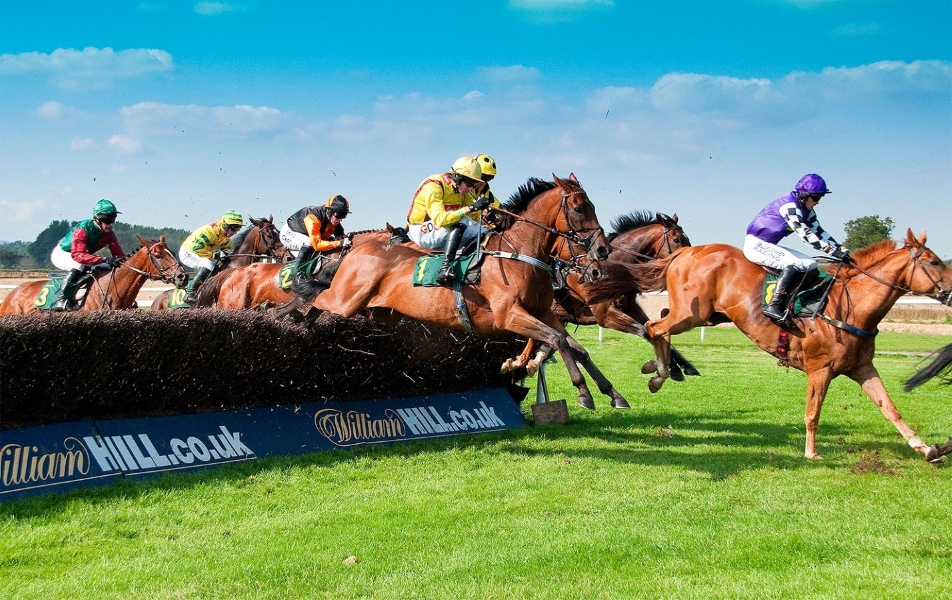
At its simplest, National Hunt racing is racing over obstacles. There are hurdles and there are fences, and the horses jump every one of them at speed, in a pack, with a jockey steering them through. Plain enough to describe, and a good deal harder to do.
Distance and jumping shape everything. Races start at around two miles and stretch beyond four, where the real stayers earn their living.
Speed still counts, but it is no longer the whole story. A horse that cannot jump is a danger to itself however fast it gallops, and a horse that jumps well but empties out in the last mile will start to make mistakes as the concentration goes. The best jumpers do both: they clear their fences without breaking stride, and they keep it up over trips that would finish a Flat horse bred purely for speed.
Then there is the thinking. A jockey over jumps has to read the race around him while managing his horse’s jumping at the same time. Do you take the inside on the run to the third last, knowing a mistake there ends your day? Do you give the horse a bit more room to find its feet? Choices that would be hard enough on the Flat become a different thing altogether when there is a five-foot fence at the end of the sum.
Underneath all of it is an animal that is older, stronger and tougher than its Flat cousin. The Flat rewards the precocious youngster. National Hunt rewards the horse that has filled out over the years, taken its knocks, learned the job, and come good once it has the experience and the strength to go with it.
History and Heritage
The story starts, fittingly, with a bet and a church. In 1752, in County Cork, two riders raced across open country from the church of St John in Buttevant to the church of St Mary in Doneraile, about four and a half miles apart, steering by the steeples. History records no winner, only that it happened. From that ride came the word “steeplechase,” and from steeplechasing came National Hunt racing.
For its first century or so, the sport had next to no regulation. Races were run across fields and farmland, over hedges and brooks, at whatever distance the ground allowed. The earliest of real note was the St Albans Steeplechase, first run in 1830. That free-for-all was part of why the establishment looked down on it, a rough, ungoverned business next to the formal world of the Flat.
The turn came in 1865, when the National Hunt Committee was formed and the sport was regulated in earnest. Races moved onto proper tracks. Rules were written down and enforced. The National Hunt Steeplechase became an annual event, shifting from course to course before settling at Cheltenham in 1911. The rest followed: the Cheltenham Gold Cup in 1924, the Champion Hurdle in 1927. The modern calendar was taking shape.
The Grand National at Aintree was already well established by then. Its first official running came in 1839, over four miles of Merseyside farmland, and was won by a horse called Lottery. It has never once loosened its grip on the public since.
The National Hunt Horse
The horse is different. It is the first thing a Flat fan notices on crossing over, and there is no missing it. Where Flat horses are fine-boned and built for a sudden turn of foot, jumpers are bigger, stronger and more substantial. They look like athletes who have been at it for years. Usually they have.
A Flat horse can start racing at two. A jumper often does not see a track until four or five, and may not peak until seven, eight or nine. Some are still going strong at twelve and beyond. The shape of a jumper’s career has nothing in common with the short, high-value dash of a Flat horse.
Plenty are bred for the job, from Irish and French bloodlines developed over generations to produce the size, scope and temperament the sport needs. Others start on the Flat and switch once their form suggests they lack the speed for the top level but might thrive over further with something to jump. Some of the greatest jumpers of all made exactly that move.
One consequence is that jumpers are, with exceptions, geldings. Castration takes away the breeding value that makes a Flat horse worth retiring to stud, but it settles the temperament and lets the horse race on for longer. That is why the money in National Hunt works differently. It is in the winning, not in what comes after.
Types of Races
National Hunt racing runs over distances from around two miles to four and beyond, with a good variety of race types inside that range.
Graded Races
The jumps equivalent of the Flat’s Group races, made up of Grade 1, Grade 2 and Grade 3 contests. This is where the elite compete and where careers are defined. Grade 1 is the summit: the Cheltenham Gold Cup, the Champion Hurdle and the King George VI Chase all sit there. Grade 2 and Grade 3 races are the stepping stones and the trials, the path a good horse takes to prove itself before the championship meetings.
Just below them, as on the Flat, sit the Listed races. There are fewer than on the Flat, but they do the same job, bridging the gap between handicaps and graded company.
Hurdle Races
The smaller of the two jumping codes. Hurdles are portable obstacles about three and a half feet high, and a horse can brush through one without the punishment a fence hands out. The hurdle division is usually where younger horses learn to jump, and it has its own championship ladder from novice level up to the Champion Hurdle. Two-mile hurdles can be quick, with the best hurdlers going a gallop that would not shame a Flat horse.
Steeplechases (Chases)
The bigger obstacle code and, for many, the soul of the sport. Chase fences are fixed and solidly built, and a bad mistake will put a horse and jockey on the floor. Distances run from around two miles up to the Grand National trip of four miles and two and a half furlongs. The best chasers are among the most admired athletes in British sport.
Handicaps
Found in both the hurdle and chase divisions. As on the Flat, each horse carries a weight set by its official rating, in theory giving them all an equal chance. In practice the winner is the one that beats its mark, and a well-handicapped horse can carry real ante-post value through the winter.
Juvenile Races
Restricted to the hurdle division, for horses that are three or four depending on where you are in the season. Like all racehorses, juveniles share a universal birthday of 1 January, so a horse that starts the season as a three-year-old becomes a four-year-old on New Year’s Day without ageing a day in real terms: same horse, same races, just a different number on paper.
They are usually run over two miles, and the inexperience in the fields can make them hard to call. That cuts both ways. You are often watching the next crop of top hurdlers take their first steps, and picking one out early has a satisfaction all its own.
It is worth knowing how a juvenile differs from a novice, because the two are easy to muddle. Juvenile races are limited to a set age range. Novice races, below, are open to any age. A horse can be both at once, but not every novice is a juvenile.
Novice Races
For horses in the early part of their jumping career. A novice hurdler or novice chaser has not won a race in that discipline before the current season began. Once it wins, it can keep running as a novice for the rest of that season, but it loses the status the following year and steps up into open company.
This matters because it builds a natural ladder through the sport. Horses learn the trade against others as green as themselves, find their confidence and school their jumping before being asked to face hardened rivals. A horse rushed through novice company too fast, winning easily but moving up before it is ready, can come unstuck when the step up arrives.
The best novice races carry enormous prestige. The Supreme Novices’ Hurdle opens the Cheltenham Festival on the Tuesday, and the Arkle Trophy does the same for novice chasers. Both are Grade 1s, both are fiercely competitive, and both have a habit of throwing up horses that go on to define the sport for years.
Bumpers
A bumper is a National Hunt flat race with no obstacles. It is not the contradiction it sounds. Bumpers exist for young horses with a jumping future who need racecourse experience before they tackle hurdles. They run on the same tracks and under the same rules as other jumps races, with the hurdle course cleared for the day. They can be quietly competitive, since they often hold horses of real ability who are simply too raw to go over fences yet.
The Season
National Hunt racing goes on all year, but the season in any real sense runs from October to late April or early May. The summer months are on the calendar but carry far less weight. October is when the serious business starts.
The traditional opener is at Chepstow, where the soft autumn ground tells trainers which of their horses is fit and forward and which still needs time. From there November brings the first big fixtures, among them the November Meeting at Cheltenham, often called the mini-Festival and the first proper look at the season’s leading contenders.
December turns on two very different meetings. The Welsh Grand National at Chepstow in late December is a hard stamina test that often points to Grand National horses. Boxing Day belongs to the King George VI Chase at Kempton Park, which stands in a class of its own and is covered separately below.
January and February are the building months, when the trials clear up the Cheltenham picture and the ante-post markets tighten. Festival Trials Day at Cheltenham in late January is one of the most watched single days of the mid-season.
March means Cheltenham. April means Aintree and the Grand National. Then, in late April, the season signs off at Sandown before the summer jumps take over and the Flat returns to centre stage.
The Key Races
Picking ten key races from the jumps calendar is, if anything, harder than doing it on the Flat. There are simply so many that matter through the winter.
- The Cheltenham Gold Cup
- The Grand National
- The Champion Hurdle
- The King George VI Chase
- The Queen Mother Champion Chase
- The Stayers’ Hurdle
- The Tingle Creek Chase
- The Coral Gold Cup (Newbury)
- The Ryanair Chase
- The Punchestown Gold Cup
As with the Flat, I will write about many of these in more detail through the season, their histories, the horses that defined them, and what makes each one what it is.
Its Place in British Culture
National Hunt racing holds a spot in the British sporting year that nothing else quite fills. It is the sport of long winter afternoons and muddy boots, of Boxing Day at Kempton and March mornings up on Cleeve Hill above Cheltenham. Millions who would never call themselves racing fans still know the Grand National as well as they know the FA Cup final.
The Grand National has a reach far beyond any other race meeting in British sport, shown in more than 140 countries to an audience of up to 500 million. Office sweepstakes run in places that never mention racing at any other point in the year, as reliably as the race itself. It is one of those rare events that works as elite sport and national occasion at the same time.
Cheltenham runs it close, in its own way. The Festival, four days in March, produces an atmosphere that seasoned racegoers struggle to put into words for anyone who has never stood in it. The racing is exceptional. The noise is something else. The sense that the whole jumps season has been building to this week, this course, these races, is there in a way you cannot manufacture.
Ireland’s part in it can hardly be overstated. Irish-trained horses have dominated at the top for decades, and the traffic between Irish and British racing gives the big festivals a genuinely international edge the Flat rarely matches outside a handful of days.
National Hunt is sometimes cast, unfairly, as the junior partner to the Flat. That misreads it. It is a different sport in most of the ways that count: different horses, different demands, different stories, different timescales. The rivalries that build across seasons over jumps, the horse you follow from its novice days to a Gold Cup or a Grand National, cannot happen on the Flat, where careers are too short and the pull of the breeding shed too strong.
There will come a morning in late October when the ground softens after the first real rain of autumn, and the jumps season begins again in earnest. The horses come back from their summer break. The trainers have their plans. The ante-post markets open, and the long, absorbing conversation of the National Hunt season starts over from the top. For anyone who has spent one winter properly following it, that morning has a particular feeling. Once you know it, you look for it every year.
Never miss a lesson
New guides, previews and history every week. Free to your inbox.
Join the mailing list